A week of sharp contrasts: the industry absorbed one of the hardest blows of the year with 40 satellites lost in a launch failure, while private capital kept flowing into the sector and Rocket Lab celebrated its 100th launch. In science, SpaceX caught a Starship upper stage with the tower arms for the first time, an Australian team independently confirmed the image of M87's black hole, and NASA set a date for the Roman telescope's first images. The region had its own agenda too: Bariloche brought together seven Latin American countries, and Salta closed out the first edition of Argentina Space.
Economy, investment and industry
1. Vulcan Centaur fails and 40 Amazon Leo satellites are lost
On 15 November, at 12:40 p.m. Eastern time from Space Launch Complex 41 at Cape Canaveral, United Launch Alliance (ULA) flew the Vulcan Leo 1 mission, the return to flight of the Vulcan Centaur rocket after a nine-month pause. About 10 minutes after liftoff an anomaly occurred and the vehicle failed to deliver its payload to orbit: the 40 Amazon Leo broadband satellites (formerly Project Kuiper) were lost. ULA confirmed the failure some 50 minutes later and said it did not yet have specific data on the cause.
This is Vulcan's first mission failure. The rocket debuted in January 2024 and had flown four times; earlier problems, on the second and fourth missions, involved solid rocket booster nozzles, which performed as expected on this flight, pointing to a different and more serious issue. The blow is twofold for Amazon: before this launch it had roughly 400 satellites in orbit across 15 missions (on Atlas V, Falcon 9 and Ariane 6) toward a planned constellation of more than 3,200, and this was the first of the 38 launches it has booked on Vulcan. The U.S. Space Force had already paused its national security launches on Vulcan during the previous review.
2. Rocket Lab reaches 100 Electron launches, faster than any commercial rocket
On Saturday 14 November at 12:30 a.m. Eastern time (6:30 p.m. in New Zealand), Rocket Lab launched the The Mountain God Rises mission from its New Zealand complex, reaching the 100th launch in its history. The payload was a synthetic aperture radar (SAR) satellite for Japan's iQPS, deployed by the kick stage at 575 kilometres altitude: the eleventh Electron flight for that customer, which is building a constellation of about 36 SAR satellites in low Earth orbit.
No commercial rocket has reached 100 launches in less time, not even SpaceX's Falcon 9. On the third-quarter earnings call on Monday 9 November, CEO Peter Beck reported a reliability rate of 96% across 99 launches. Electron stands 18 metres tall; its first flight, in May 2017, failed, and the second, in January 2018, delivered cubesats to orbit. The suborbital HASTE variant has flown nine missions.
3. Ramon.Space raises US$124 million for space computing and orbital data centres
On 17 November, Israel's Ramon.Space announced a US$124 million Series B led by growth equity firm PSG. New investors included Micron Technology, Senvest and Phoenix Financial, alongside existing backers StageOne, Deep Insight and Grove Ventures. The company builds onboard computing systems for communications, Earth observation, national security and future orbital data centre missions.
The capital will fund higher production and expansion into new markets. Recent work includes digital communication channelizers for additional OneWeb satellites. Ingrasys, a Foxconn subsidiary, invested in 2023, and earlier this year the two expanded their agreement to develop data centre infrastructure for space. According to CEO Avi Shabtai, the company has proven that Earth-grade computing works in space and is delivering it today. It is a telling signal about where demand is heading: the New Space bottleneck has shifted from launch to processing data in orbit.
4. SpaceX signs 60 million euros with a German mid-sized firm for Starmind solar cells
On 11 November it emerged that SpaceX had signed a 60 million euro order with Singulus Technologies, a mid-sized mechanical engineering company based in Kahl am Main, Bavaria, to supply heterojunction solar cells for its Starmind satellites. Singulus shares rose between 65% and 80%, lifting its valuation to about 73 million euros, for a company that reported 48.3 million euros in revenue in 2025. Elon Musk said it would be the first of many contracts, and the partners plan further facilities and production lines targeting 100 GW of capacity.
Delivery is scheduled for early 2027, destined for the Starmind manufacturing site in Texas. Starmind is SpaceX's project for artificial intelligence data centres in orbit: satellites with 75-metre solar wings that, according to the company's FCC filing, would achieve transformative cost and energy efficiency. There are currently some 15,000 satellites in orbit, 9,500 of them Starlink. For industrial suppliers outside the aerospace sector, the case shows a concrete way into the space value chain.
5. SABIA-Mar enters its final integration and testing stage in Bariloche
On 17 November it was reported that Argentina's SABIA-Mar satellite — Satellite of Applications Based on Marine Environmental Information, a project led by CONAE with INVAP as prime contractor — has entered its final integration and environmental testing stage. CONAE still targets launch for the second quarter of 2027.
Its main instrument is a set of optical ocean-colour cameras, which allow chlorophyll-a (an indicator of phytoplankton) and water turbidity to be derived, with applications in fisheries, coastal and estuary monitoring, the carbon cycle, biodiversity and climate change. Resolution is 200 metres for the regional scene — covering the Argentine and South American coasts — and 800 metres for open sea and global scenes, with a revisit of roughly two days depending on cloud cover. The environmental test campaign began in September 2026 at INVAP's facilities in San Carlos de Bariloche; in its 21 October update CONAE reported the structural mating of the service module with the instrument module and the completion of thermal vacuum testing, with solar panel integration, deployment tests and vibration tests still pending. The ground segment passed two reviews from 20 to 22 October at the Teófilo Tabanera Space Centre in Córdoba, with the Brazilian space agency taking part. VENG, CNEA, UNLP, IMER and Ascentio are also involved.
6. Seven Latin American countries and ESA meet in Bariloche to shape a regional space agenda
On 12 and 13 November, INVAP's headquarters in San Carlos de Bariloche hosted the Latin American Meeting on Space Development and International Cooperation, with representatives from seven countries: Argentina, Brazil, Chile, Colombia, Costa Rica, Mexico and Peru. It was organised by Fundación Embajada Abierta and the Konrad Adenauer Foundation, with INVAP as host, and featured Kai-Uwe Schrogl, special adviser for political affairs at the European Space Agency, who presented Europe's cooperation mechanisms.
The opening remarks came from Josefina Pérès, CONAE's technical and executive director, who summed up the point of the meeting in a single line: space is too complex to do alone. She noted that the region shares challenges such as ocean and climate monitoring, and that as emerging countries and Artemis Accords signatories there is an opportunity to take part in lunar exploration together. Jorge Argüello, president of Fundación Embajada Abierta, called for harmonising and coordinating action among countries with satellite experience and proposed dividing the work so that not every country reproduces the full technology chain. The limits are worth stating: no regional institution was created, no agreement binding governments was signed, and no financing or concrete mission was announced. The meeting's value lay in mapping capabilities — universities moving from training people to building their own small missions, New Space startups, clusters — and leaving the door open to shared projects.
7. Argentina Space 2026 closed its first edition in Salta with NASA, SpaceX and Firefly
From 11 to 13 November, Salta hosted the first edition of Argentina Space 2026, which brought together specialists from NASA, SpaceX and Firefly Aerospace with Argentine companies, universities and researchers. Speakers included Lucas Paganini, the Argentine scientist who serves as Lead Program Executive for NASA's Nancy Grace Roman Space Telescope; Jesús Charles, flight director of Firefly's Blue Ghost 1 mission, the first fully successful commercial Moon landing; Roberto Giménez, an engineer with a career at SpaceX, on reusable launchers and Starship; Pablo de León, director of the human spaceflight laboratory at the University of North Dakota, with his NDX-1 and NDX-2 suits; and astronaut candidate Noel de Castro.
The Argentine centrepiece was ATENEA, a 12U CubeSat developed under CONAE coordination together with UNLP, UNSAM, VENG, CNEA and IAR. It flew as a secondary payload on the Artemis II mission and, according to the results presented, operated for 20 hours and transmitted from more than 70,000 kilometres from Earth, meeting its experimental objectives in radiation, electronics, sensors, communications and long-range reception of satellite navigation signals. Fernando Filippetti (UBA) and Facundo Pasquevich (UNLP) also spoke on ATENEA and low-cost microsatellites.
Science, exploration and missions
8. Starship: SpaceX catches a ship for the first time, but loses the booster
On 13 November at 5:47 p.m. Eastern time, from Starbase in Texas, SpaceX launched Flight 15 of Starship with Super Heavy Booster 22 and Ship 42. The 33 Raptor 3 engines delivered more than 18 million pounds of thrust, and hot staging came about two and a half minutes after liftoff. The ship reached low Earth orbit at roughly 275 kilometres and deployed 26 Starlink V3 satellites over a 42-minute window, which according to SpaceX adds close to 1 terabit per second of capacity, equivalent to ten Starlink V2 launches.
The historic moment came the next day: on Saturday 14 November, at about 3:20 p.m. Central time, the ship returned from orbit and was caught by the launch tower's mechanical arms — the first catch of a Starship — after some 22.5 hours of flight and fourteen orbits of Earth. The booster, by contrast, was lost: its catch was aborted and it made a controlled descent into the ocean near Starbase, with the flight termination system activating just before impact. According to SpaceX's Kate Tice, early indications are that the booster ended its boostback burn early because of a low fuel mass alarm; Musk attributed it to slight engine underperformance. This was the first attempt to catch a V3 booster: all four flown so far, on flights 12 through 15, were lost.
9. An independent AI-based technique confirms the image of M87's black hole
On 16 November, a team at Australia's CSIRO, through the Australia Telescope National Facility, published in Nature an independent reconstruction of the famous image of the supermassive black hole at the centre of the galaxy M87, some 55 million light-years away. The method, called GenDIReCT, applies machine learning and artificial intelligence to Event Horizon Telescope data to capture the object's structure while filtering out atmospheric disturbances, and it reduces the weight of calibration errors and subjective image-processing decisions.
The result matters because since 2019 there had been debate over whether the bright ring in that image was a real feature or an artefact introduced during reconstruction. The work strengthens confidence that the ring surrounding M87's black hole is a genuine astrophysical phenomenon. It is also a good example of a pattern that keeps recurring in the sector: the value lies not only in the instrument that takes the data, but in the algorithms able to extract more information from the archive that already exists.
Source: CSIRO - Australia Telescope National Facility
10. Sentinel-6B is cleared to become the world's sea level reference
In a statement dated 16 November, NASA's Jet Propulsion Laboratory reported that the Sentinel-6B satellite completed its calibration — as of 30 October — and passed all initial system checks, so its data meets the strictest quality and accuracy standards. In January it will take on the role of reference satellite that every other sea level mission uses to calibrate its own data, a position currently held by its twin, Sentinel-6 Michael Freilich.
Launched on 16 November 2025, Sentinel-6B forms, together with its twin, the Copernicus Sentinel-6/Jason-CS mission, the latest in a series of radar altimetry missions that have been measuring sea level along the same ground track since the early 1990s. Its radar altimeter emits thousands of pulses per second and times their return to determine ocean height; it also records wave size and marine wind speed. Because warm water expands, sea level also serves as an indicator of ocean heat content. Michael Freilich, which currently flies 30 seconds ahead, will move into an accompanying orbit so the pair can deliver higher-resolution data than either alone. Applications range from hurricane forecasting to coastal infrastructure protection and commercial shipping, and current data feeds the study of sea level changes associated with El Niño.
11. NASA set a date for the Roman telescope's first images: 7 December
On 17 November NASA announced that it will reveal the first images from the Nancy Grace Roman Space Telescope on Monday 7 December at 3:30 p.m. Eastern time, in a live stream from the American Geophysical Union annual meeting in San Francisco. A fireside chat with NASA Administrator Jared Isaacman is set for 2:45 p.m., and the images will also be published on the agency's website.
Roman launched on 30 August 2026 from Kennedy Space Center on a SpaceX Falcon Heavy and travelled about a million and a half kilometres over roughly three months to its final orbit at the Sun-Earth L2 Lagrange point, where it is now in commissioning. It combines a wide field of view with crisp infrared vision and carries a coronagraph as a technology demonstration for directly imaging planets around other stars; its science goals are dark energy, dark matter, exoplanets and large surveys of cosmic history. It is managed by Goddard Space Flight Center together with JPL, Caltech/IPAC and the Space Telescope Science Institute, with BAE Systems, L3Harris and Teledyne as primary industrial partners. The regional detail: the mission's Lead Program Executive is Argentina's Lucas Paganini, who spoke in Salta this very week.
12. The gamma-ray payload for the COSI mission arrives at Northrop Grumman
On 16 November, NASA reported that the instrument for its COSI mission (Compton Spectrometer and Imager) arrived at Northrop Grumman's satellite manufacturing facility in Sterling, Virginia. The detector assembly had been integrated over the northern summer at the Space Sciences Laboratory of the University of California, Berkeley, and left by truck on 2 November. It will now be installed on a LEOStar-2 platform and put through vibration and thermal testing ahead of launch, scheduled for August 2027.
COSI is a wide-field gamma-ray telescope — gamma rays being the highest-energy form of light — and it will study energetic phenomena in the Milky Way and beyond, including the creation and destruction of matter and antimatter and the final stages of stellar life. It is part of NASA's Astrophysics Explorers programme, with participants including the University of California campuses at Berkeley and San Diego, the Naval Research Laboratory, Goddard Space Flight Center, the Space Dynamics Laboratory and the Italian Space Agency.
Argentina Space 2026
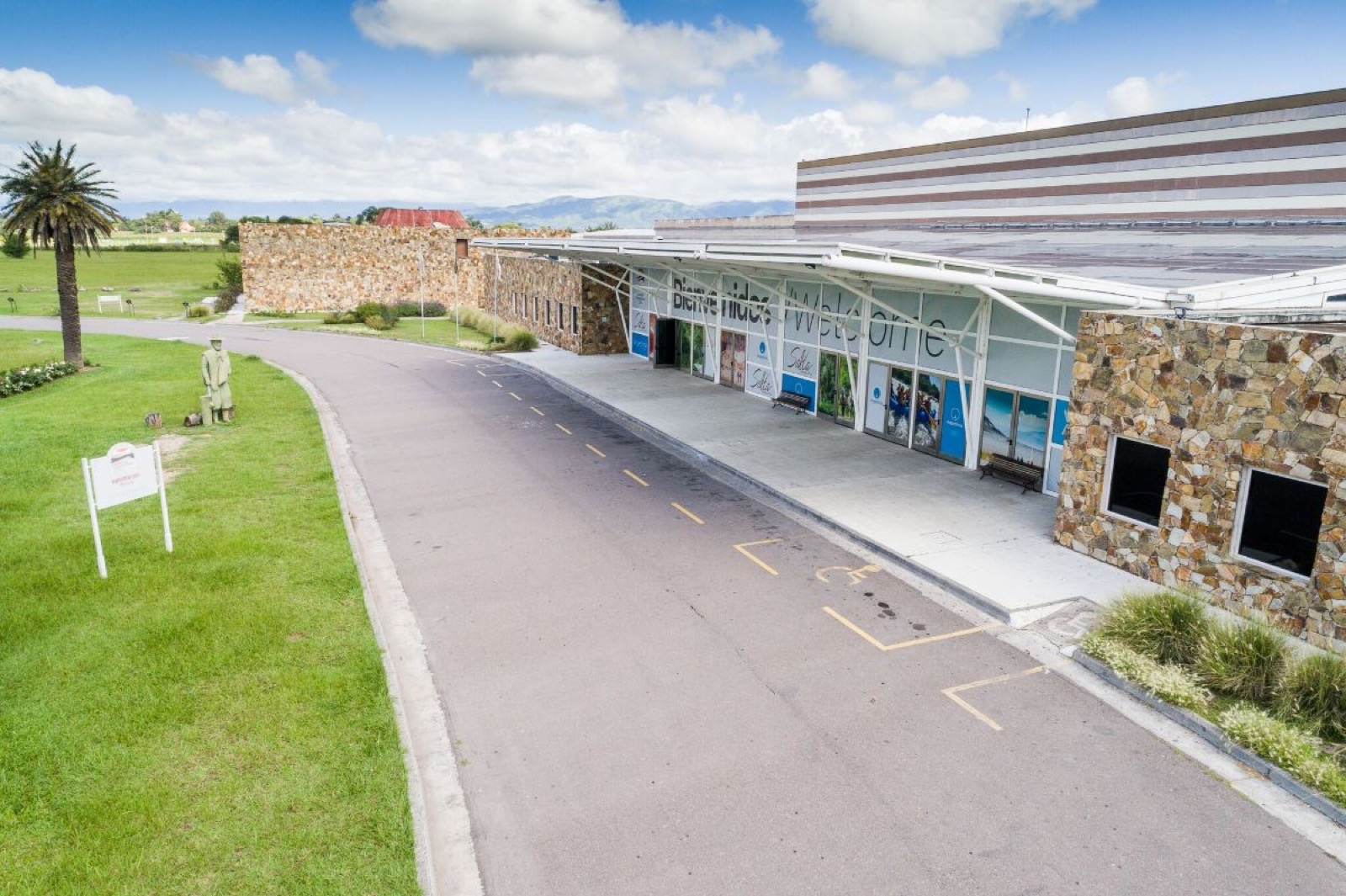
Argentina Space 2026 — Argentina driving the New Space Economy held its first edition on 11, 12 and 13 November 2026 at the Salta Convention Centre: the first major national gathering of the space, technology and science industry, bringing together agencies, companies, universities, startups and investors from Argentina and around the world.
If you want to be part of the founding core of New Space in Argentina and join what comes next as an exhibitor, sponsor or attendee, write to marketing@argentinaspace.com. More information at argentinaspace.com.