
Relive the congress · Day 2 · Thursday 12
Neuroplasticity and human factors in microgravity: from the Puna to Mars
From the Puna to Mars
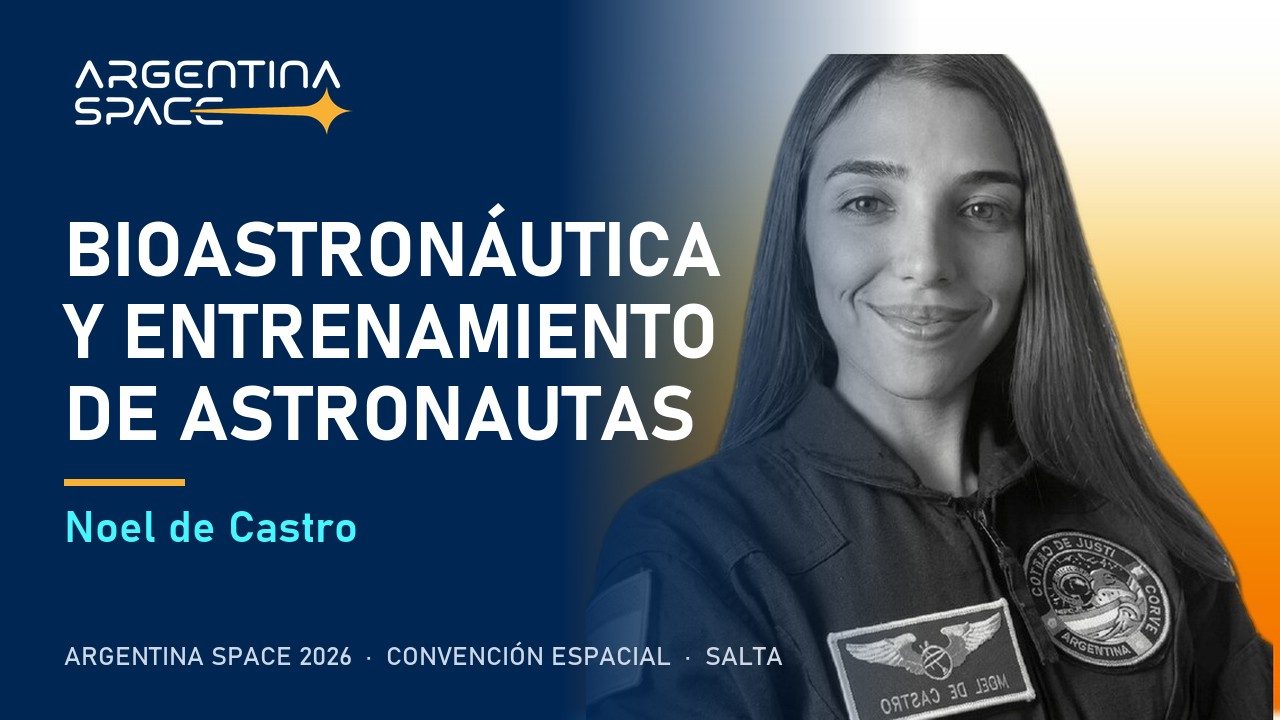
Life sciences, health and human factors · María José de Castro · Health and human factors in space
She began by getting the audience to jump, to show how movement changes mood. Drawing on space psychology, she explained how those who travel are selected, why long missions call for teamwork rather than individual brilliance, and how confinement, lack of sleep and stress affect the brain. She closed on a positive note: stress is not always negative, it can also motivate.
«This is not about me standing out above someone else. Here we are all under one mission and we have to act as a group.»
In this talk
- How astronauts are selected: “select out” and “select in” criteria.
- From test pilots to Skylab 4: why long missions call for a different profile.
- Psychosocial support, family and long-distance communication.
- Confinement and analog environments such as Antarctica, submarines, Mars 500 and the Puna.
- The psychoneuroimmunoendocrine axis, the microbiota and changes in the brain in microgravity.
- Stress as a motivating factor too: the salutogenesis perspective.
Chapters
I want to be part of itWatch on YouTubeAll talks
More talks on this topic: Health and human factors in space
With the support of
















- FIDR Santa Fe

























Thank you for being part of the first mission.
From 11 to 13 November, Salta brought together the country's space industry, science and technology. We are editing the videos of the talks so you can watch them again.