
The week left two signals worth reading together: capital and regulation are reorganizing around satellite connectivity, while scientific exploration added a historic launch toward the moons of Mars. SpaceX reported its first profitable quarter as a listed company, four European telecom giants joined forces to contest satellite mobile spectrum, and the FCC cleared the way for a constellation central to Amazon's plans. Meanwhile, Japan departed for Phobos, a Russian military satellite maneuvered within meters of a commercial spacecraft, and astronomy logged several genuine firsts.
Economy, investment and industry
1. SpaceX reports its first profitable quarter as a public company: $14.6 billion in revenue
On October 20 SpaceX reported third-quarter 2026 results with revenue of $14.6 billion, a 161% jump from $5.6 billion in the same quarter a year earlier, and net income of $4.4 billion —its first quarterly profit since the IPO— against a $1.1 billion loss a year before. The most striking element of the breakdown is the composition of that growth: the Super Intelligence segment contributed $7.6 billion (+830%), surpassing the connectivity business for the first time, which grew 69% to $5.2 billion. For the New Space ecosystem the reading cuts two ways: it confirms that orbital infrastructure can sustain margins at scale, and it shows that value is shifting from transport and access toward the data and compute services built on top of that infrastructure.
Source: Quartz
2. Deutsche Telekom, Orange, Telefónica and Vodafone team up to bid jointly for European satellite spectrum
Europe's four largest mobile operators signed a letter of intent on Monday, October 19 to examine a joint bid for the European spectrum set aside for mobile satellite services, with the goal of offering direct-to-device connectivity on the phones people already own. They have not yet chosen a satellite partner, and that is the strategic point: the consortium wants to negotiate from a position of strength rather than depend on a dominant supplier. It is the most concrete defensive move so far by European telcos against the advance of Starlink and Amazon in direct-to-cell connectivity, and it opens a window for regional satellite operators looking to position themselves as an alternative.
Source: Quartz
3. FCC clears Globalstar's C-3 constellation as Amazon's $11.6 billion acquisition moves forward
On October 20 the U.S. Federal Communications Commission granted Globalstar nationwide authority to operate its C-3 system: 48 satellites in low Earth orbit at 1,414 km, six in-orbit spares and roughly 90 ground antennas, with stations in six states and Puerto Rico. The system targets hundreds of millions of U.S. mobile devices, including direct links to smartphones. The satellites are being built by MDA Space in Canada. The approval is a key piece of the deal under which Amazon agreed in April to buy Globalstar's satellite operations for $11.6 billion: closing is expected in 2027, subject to regulatory approval and Globalstar meeting specified satellite milestones. It is a reminder that in this industry a spectrum license is worth as much as the hardware.
Source: Mobile World Live
4. Rocket Lab pushes Neutron's debut to 2027 and its stock falls more than 10%
Rocket Lab announced on October 14 that the first flight of Neutron, its reusable medium-lift launcher, slips again: now to 2027, with no set date. The chain of problems is instructive for anyone manufacturing composite structures: first, the rupture of a first-stage tank during January testing revealed a manufacturing defect in a hand-laid part from a contractor; Rocket Lab then moved production to an automated fiber placement machine, and that machine exposed air pockets between carbon fiber layers in the propellant dome. The company fixed the process and is building a new dome, which must pass void inspection, full first-stage assembly, and hydrostatic and cryogenic testing. CEO Peter Beck expects those steps to be complete around the first quarter of 2027, when the company will announce a launch target. The stock fell more than 10% after the update, though Beck alluded to new, as yet unannounced launch contracts.
Source: Via Satellite
5. A Russian military satellite maneuvered within a few hundred meters of a commercial radar satellite
On October 18 at about 01:35 UTC, Russia's Cosmos 2612 military satellite passed within a few hundred meters —possibly closer— of ICEYE-X36, a roughly 90 kg U.S.-registered commercial radar satellite operated by Finnish-founded ICEYE. The sequence was deliberate: Cosmos 2612 began repositioning on September 30, and an October 12 maneuver placed it about 475 km behind ICEYE-X36 in the same orbital plane; on October 17 astronomer Jonathan McDowell reported it stationkeeping within 5 km or less. McDowell described it as the first rendezvous he knows of between two active satellites in low Earth orbit without one operator's approval. Satellite tracker Marco Langbroek found no orbital evidence that ICEYE-X36 had been struck. Since 2022 ICEYE has dedicated capabilities from its constellation to Ukraine, though it has not confirmed whether this particular satellite serves that role, and said it is "tracking it closely." CSIS warned that sharing an orbital plane enables close-proximity operations with very little extra fuel, whether for inspection or for hostile activity. For the commercial industry the message is uncomfortable and concrete: orbital security and space insurance stop being a theoretical line item in the business plan.
Source: AeroTime
6. NASA launches two commercial communications demonstrations and accelerates the retirement of its own network
On October 20, aboard the Bandwagon-5 Falcon 9 rideshare from Cape Canaveral, NASA's SCaN program placed two commercial satellite communications demonstrations into low Earth orbit. Viasat will test high- and low-rate relay services with its Maxwell spacecraft —built by Rocket Lab— autonomously routing data among Maxwell, its geostationary satellites and its ground stations. SES Space and Defense will test equivalent services, sending high-rate data through its O3b mPOWER fleet in medium Earth orbit and low-rate data through its geostationary satellites. Behind this lies a structural shift in model: the Communications Services Project awarded $278.5 million in 2022, and the agency plans to gradually retire its own TDRS satellite fleet and move future low Earth orbit missions to contracted commercial services. Testing continues through 2027.
Source: NASA
7. Argentina: Río Negro puts the national satellite industry on the public agenda
On Monday, October 19, at the Atlantic Campus of the Universidad Nacional de Río Negro in Viedma, the documentary "Argentina y el sector satelital: innovación, desarrollo y futuro" was screened, followed by a panel on the present and future of Argentina's satellite industry. Participants included Gabriel Absí, deputy general operating manager of INVAP; Gabriel Sánchez, Río Negro's finance minister; Jorge Argüello, president of Fundación Embajada Abierta; and officials from UNRN and the Konrad Adenauer Foundation. The free event was organized by the Río Negro provincial government together with the university and both foundations. Provincial officials stressed that coordination among the state, universities and technology companies is key to building local capabilities and training people. The relevant point is not the event itself but the signal: the debate over Argentine satellite capabilities is moving out of technical agencies and into the provincial productive agenda.
Source: Anroca
Science, exploration and missions
8. Japan launched MMX, the first mission that will attempt to return samples from a moon of Mars
On October 19 at 3:41 p.m. EDT (October 20 Japan local time), an H3 rocket —developed by JAXA and Mitsubishi Heavy Industries, on its tenth flight— lifted off from the Tanegashima Space Center carrying the MMX (Martian Moons eXploration) mission. About 71 minutes after liftoff, following trans-Mars injection, the spacecraft separated from the upper stage. If successful, MMX will be the first mission to land on Phobos and return samples to Earth. The cruise lasts about 10 months, with arrival in August 2027; the spacecraft will enter a quasi-satellite orbit around Phobos, spend roughly three years in the Martian system mapping the moon to select landing sites, perform two sample touchdowns and fly by Deimos in its final months. Departure for Earth is planned for November 2030, with the capsule landing in Australia in 2031. The mission is a good example of international architecture: it carries the IDEFIX rover, developed jointly by the French and German space agencies, which will deploy on Phobos in late 2028 or early 2029; NASA contributed the MEGANE gamma-ray and neutron spectrometer, a pneumatic sampler from Honeybee Robotics and Deep Space Network support, investing about $87 million in exchange for at least 15% of the roughly 10 grams of sample planned. ESA is also a partner.
Source: Space.com
9. The first genuinely green star identified: a white dwarf eating its own planetary system
A team led by Mark Hollands of the University of Warwick described WD J1330+6435, a cool white dwarf about 326 light-years away, as the first known star that genuinely looks green. The color is not an imaging artifact: the stellar remnant has been accreting rocky material from a planetary companion, enriching its atmosphere with calcium, lithium and sodium. According to the team's model, sodium absorbs orange light, leaving a green glow. The work was published on October 14 in RAS Techniques and Instruments. Beyond the chromatic curiosity, the finding is a direct window into the composition of destroyed planets: measuring what a white dwarf "digests" is one of the few ways available today to analyze planetary chemistry outside the Solar System.
Source: Space.com
10. The Webb telescope maps an exoplanet's atmospheric edge for the first time and finds it lopsided
Researchers at Cornell University and the University of Bristol used the James Webb Space Telescope to build the first spatial map of an exoplanet's atmospheric limb: WASP-17b, a hot Jupiter about 1,300 light-years away. The atmosphere turned out to be asymmetric: it extends farther on the evening side than on the morning side, though the overall outline remains roughly circular. The explanation is meteorological: strong winds carry heat from the permanently lit hemisphere to the night side, and that transport inflates the edge. The technical advance is a new method called transmission strings, which separates light coming from different regions of the planet's limb instead of averaging it into a single spectrum. The results match earlier theoretical predictions about the temperature difference between the morning and evening sides, and the method could be applied to other exoplanets to study atmospheric circulation and weather. It was published in Nature Astronomy under the title "A spatial map of the atmospheric limb of a hot Jupiter".
Source: ScienceDaily
11. A universal rule discovered behind black hole jets
A study led by Adelle Goodwin of the International Centre for Radio Astronomy Research at Curtin University, with Andrew Mummery of the Institute for Advanced Study in Princeton, found that black holes of very different masses launch their jets at the same critical feeding rate. Delayed jets appear when the accretion rate falls to about 2% of the Eddington limit, the point at which radiation pressure balances gravity. That same threshold had already been linked to jet formation in small black holes in the Milky Way, suggesting a common mechanism across several orders of magnitude in mass. The team combined observations from telescopes in Australia, the United States, India, South Africa and in space, and argues the result could make it possible to predict when a jet will launch. Published on October 16 in Nature Astronomy.
Source: ScienceDaily
12. The most precise measurement yet of the Universe's first five minutes
A team at the University of Minnesota measured how much helium was produced in the first five minutes after the Big Bang and reduced the uncertainty to 0.5%, three times more precise than previous estimates. Instead of observing many galaxies and extrapolating backward, they studied 15 small, distant galaxies with very little chemical evolution, true "time capsules" that preserve primordial conditions. They used the Large Binocular Telescope with about 130 hours of observations and the MODS spectrographs developed at Ohio State University, analyzing more than 10 helium lines and 15 hydrogen lines together to correct subtle measurement errors. The results were published in five papers in The Astrophysical Journal, the first authored by Evan Skillman, Richard Pogge and colleagues, and released on October 20. The measurement is not merely descriptive cosmology: it serves as a test of the Standard Model, because it allows the number of neutrino families in the early Universe to be calculated.
Source: ScienceDaily
Join Argentina Space 2026
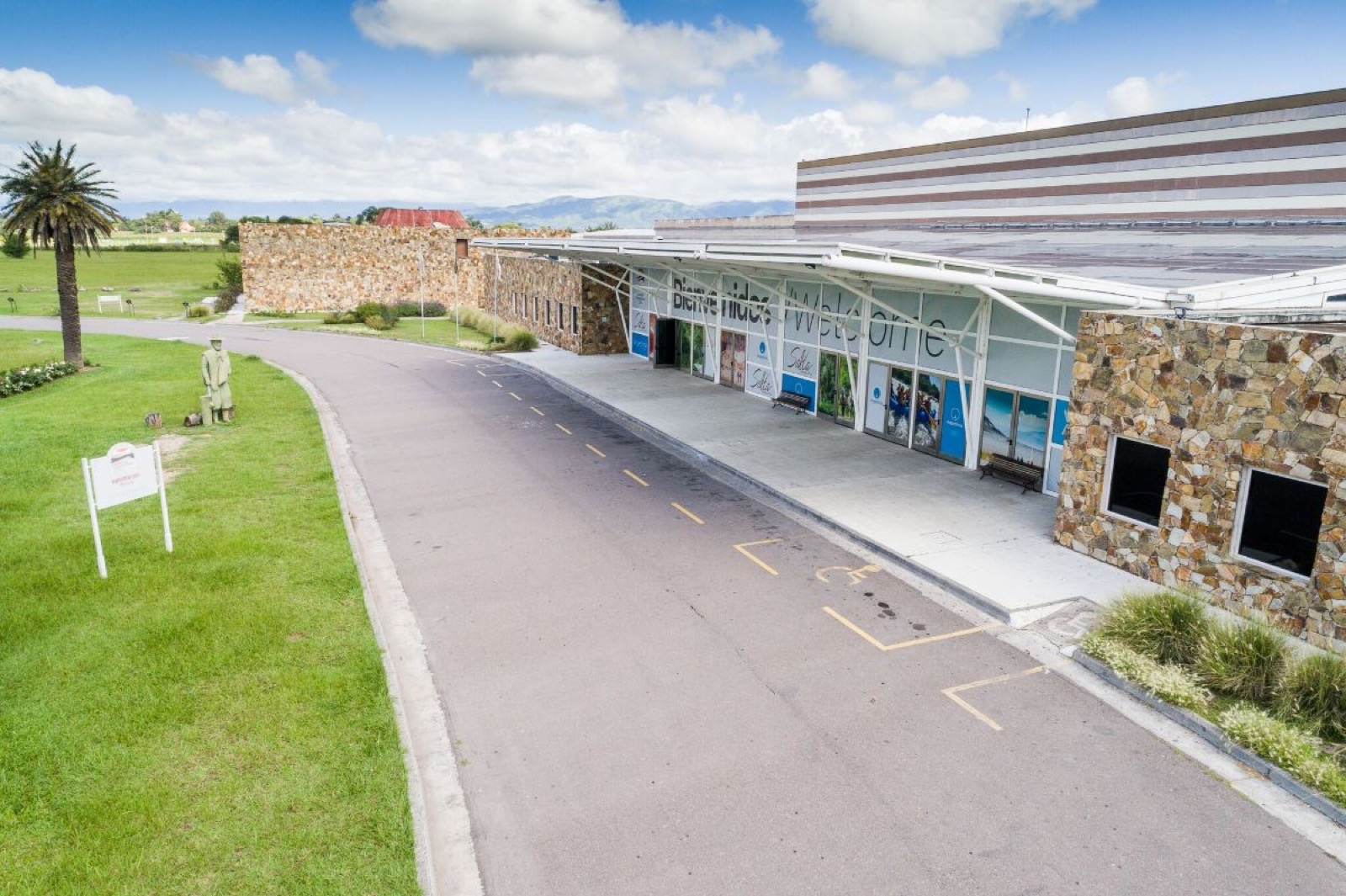
Argentina Space 2026 — Argentina driving the New Space Economy will take place on November 11, 12 and 13, 2026 at the Salta Convention Center. It is the first major national gathering of the space, technology and science industry, bringing together agencies, companies, universities, startups and investors from Argentina and around the world.
If your organization works in satellites, launchers, Earth observation, connectivity, software, data or any link in this value chain, you can join as an exhibitor, sponsor or attendee.
Join Argentina Space 2026, on November 11, 12 and 13 at the Salta Convention Center, and be part of the founding core of New Space in Argentina. More information: https://argentinaspace.com
Contact: marketing@argentinaspace.com